


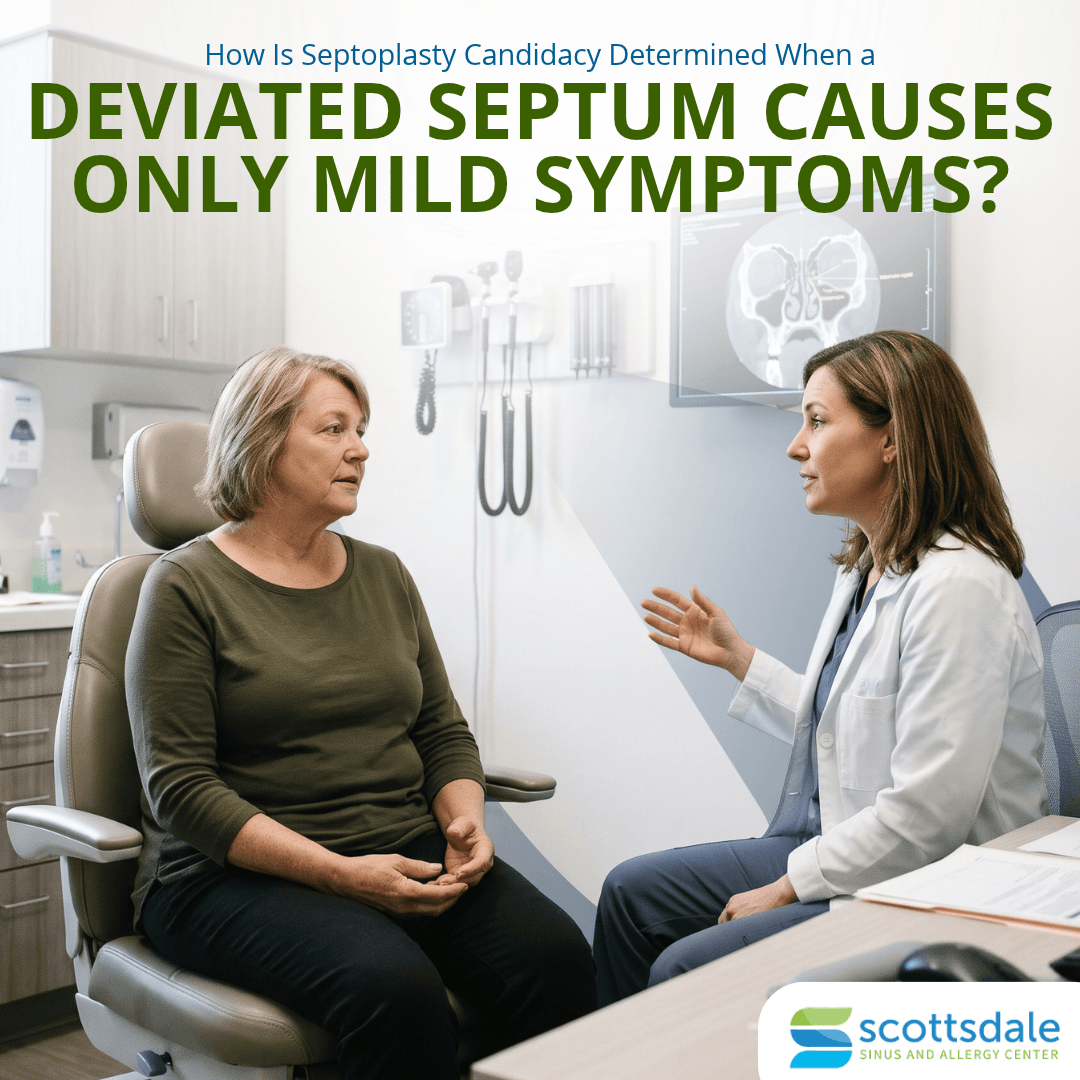
How Is Septoplasty Candidacy Determined When a Deviated Septum Causes Only Mild Symptoms?
Persistent sinus issues such as breathing difficulties through the nose, nasal congestion and obstruction, facial and sinus pressure, and headaches can be frustrating, especially if they start affecting your daily routines, work, productivity, concentration, sleep, and comfort.
Several factors may contribute to persistent sinus issues. One of them is a deviated septum. Now the question is: can a patient be an ideal candidate for septoplasty even when symptoms are only mild?
An ENT specialist can help evaluate your symptoms and their severity, the severity of the deviation, and whether the potential benefits of the procedure outweigh the risks.
Here at Scottsdale Sinus and Allergy Center, we help patients in Scottsdale, AZ, understand their symptoms and whether septoplasty may be clinically appropriate to manage symptoms.
Can Septoplasty Be Considered Even With Mild Deviated Septum Symptoms?
Yes, someone with mild deviated septum symptoms may still be considered for septoplasty. However, the severity of the symptoms alone does not necessarily determine whether a patient is an ideal candidate for the procedure.
A patient’s candidacy for septoplasty is determined through an individualized assessment that considers several factors, such as:
- The location and degree of the deviation
- Whether the septal deviation significantly restricts nasal airflow
- How frequently symptoms occur
- How symptoms affect daily life, activities, breathing, sleep, and comfort
- Whether other conditions, such as allergies, nasal polyps, or enlarged turbinates, contribute to symptoms
- Previous treatment attempts and the patient’s response to them
- The patient’s overall health and treatment goals
Understanding a Deviated Septum and Septoplasty
What is a deviated septum?
A deviated septum is an anatomical variation in which the nasal septum, the thin wall of bone and cartilage that separates the nose into left and right nostrils, is off-center and misaligned.
Many people have a nasal septum that’s a little misaligned. However, not all cases will cause significant and noticeable symptoms, which is why many individuals don't even realize that they have one.
A more significant septal deviation can interfere with airflow and sometimes even sinus flow and drainage, which may cause more noticeable obstruction, sinus symptoms, and breathing difficulties through the nose.
Common symptoms of a deviated septum may include:
- A nose that looks off-center or nostrils that look uneven
- Persistent nasal obstruction
- Breathing difficulties through the nose, which is usually worse on one side
- Facial or sinus pressure
- Headaches
- Reduced sense of smell
- Noisy breathing
- Snoring
- Frequent nosebleeds
Some people may be born with a deviated septum, which may result from a complicated delivery causing trauma or injury to the nose. Others may develop it later from an injury or trauma to the nose from sports accidents, falls, or a broken nose.
What is septoplasty?
Septoplasty is a surgical procedure that is designed to straighten, reposition, or correct a deviated nasal septum.
The procedure can help correct the position of the misaligned nasal septum that may be contributing to persistent breathing difficulties and nasal obstruction. Depending on the patient’s symptoms, nasal anatomy, and the degree of deviation, septoplasty may be the recommended treatment approach to improve nasal airflow and reduce persistent nasal blockage.
How Does an ENT Determine Septoplasty Candidacy When Symptoms Are Mild?
An ENT specialist considers several factors to determine whether septoplasty may be clinically appropriate:
1. The location and severity of the septal deviation
One important consideration to determine whether septoplasty is medically necessary is the degree, severity, and location of the septal deviation.
During an examination, an ENT may assess:
- Where the deviation is located
- Whether the misaligned septum narrows one or both nasal passages
- Whether the deviation contributes to nasal obstruction
- Whether the nasal turbinates are also enlarged
- Whether other anatomical issues contribute to airflow obstruction
2. How symptoms affect daily life
Another important factor is how symptoms are affecting day-to-day life, activities, work, productivity, sleep, breathing, and comfort.
Do symptoms cause frequent breathing difficulties? Do nasal obstruction interfere with physical activities and sleep? Do symptoms make you resort to mouth breathing, particularly during sleep? Have symptoms worsened or become more noticeable over time?
3. Other conditions that may contribute to persistent sinus issues
A deviated septum is only one of many possible explanations for nasal obstruction, congestion, or breathing difficulties.
Your ENT care provider may consider other potential contributing factors such as:
- Allergic rhinitis
- Nonallergic rhinitis
- Nasal polyps
- Enlarged turbinates
- Nasal valve collapse
These conditions may occur independently or alongside a deviated septum. An ENT evaluation can help assess whether other conditions may be contributing to your symptoms.
4. Previous nonsurgical treatment attempts
Typically, mild symptoms can call for appropriate nonsurgical treatment options before considering surgical options such as septoplasty.
Nonsurgical treatment options may include:
- Allergy management
- Saline rinses and nasal sprays
- Intranasal corticosteroid sprays
- Symptom monitoring and observation
It’s important to understand that while nonsurgical treatment options help manage symptoms, they do not straighten or correct a deviated septum. If symptoms persist despite appropriate medical treatment and management, septoplasty may be discussed and considered.
5. Whether the expected surgical benefits outweigh the risks
Like any surgical procedure, septoplasty carries potential risks, including:
- Persistent nasal obstruction
- Septal perforation
- Changes in the appearance of the nose or in nasal sensation
- Temporary discomfort, swelling, inflammation, or congestion during the recovery period
- Bleeding
- Infection
- The possibility of needing additional treatment or surgery
An ENT specialist will discuss potential benefits, risks, complications, and alternatives during consultation to help you make informed health decisions.
Does Every Case of Septum Deviation Require Surgery?
No, the presence of a deviated septum does not automatically mean that surgery is required.
Some degree of septal deviation is common, but not all cases cause significant nasal obstruction and noticeable symptoms. An ENT evaluation will help assess the patient’s symptoms and nasal anatomy, rather than just determine the presence of deviation, to determine if septoplasty is appropriate.
The goal of the evaluation is to determine whether the septal deviation is actually responsible for the patient's breathing difficulties and recommend treatment options based on findings.
When Is Septoplasty Usually Not Necessary?
Generally, septoplasty may not be necessary when:
- Symptoms are occasional and do not significantly affect daily life and activities
- Nasal breathing remains fairly comfortable
- The deviation does not cause significant airflow restriction
- Nasal congestion and obstruction are primarily caused by other conditions, such as allergies, that respond to medical treatment
- The expected surgical benefits do not outweigh the potential risks and recovery burden
Conclusion: Understanding Deviated Septum Symptoms and Septoplasty With Scottsdale Sinus and Allergy Center
Scottsdale Sinus and Allergy Center provides ear, nose, and throat care services for patients in Scottsdale, Gilbert, Tempe, Mesa, Glendale, and nearby Maricopa County communities. Schedule an appointment with our team to learn more about septoplasty and whether you may be an ideal candidate for the procedure.
Prepare for Allergies in Spring 2022















































The information provided in this article is for informational and educational purposes only and does not constitute medical advice. It is not intended to diagnose, treat, cure, or prevent any disease or medical condition. Always seek the guidance of your physician or other qualified healthcare provider with any questions you may have regarding a medical condition or treatment.
Results may vary: Treatment outcomes and health experiences may differ based on individual medical history, condition severity, and response to care.
Emergency Notice: If you are experiencing a medical emergency, call 911 or seek immediate medical attention.