


%20(1).avif)
ENT Credentials 101: What “FACS” and “FAAO-HNS” Actually Mean for Patients in Scottsdale, AZ
In healthcare, including ENT, a medical provider’s credentials and qualifications are often a prioritized consideration when patients are making healthcare decisions. A care provider’s credentials can tell a potential patient their education, training, and clinical experience.
Because today’s patients take on a more active role in their health, they make sure to take the time to carefully research and consider an ENT doctor in Scottsdale, AZ, to ensure they align with their individual healthcare needs and concerns.
In this guide, let’s break down the difference between FACS and FAAO-HNS, both of which you might commonly see as you look for an ENT specialist.
What Is FACS?
In healthcare, “FACS”, which stands for “Fellow of the American College of Surgeons”, indicates that a surgeon has passed a set of education, qualification, and ethics requirements to become a member of the American College of Surgeons (ACS). The ACS is a professional medical association for surgeons.
FACS is a professional fellowship designation for surgeons and is not a board certification itself.
An FACS fellowship indicates that a surgeon provider:
✅Has completed an accredited surgical training program
✅Has met board certification requirements set by a professional certifying body, such as the Otolaryngology – Head and Neck Surgery for otolaryngologists, which is generally required for ACS fellowship eligibility
✅Has been peer-reviewed and successfully accepted into the ACS
✅Demonstrates an ongoing commitment to education, training, ethical practice, and high standards of medical care in their field
What Is FAAO-HNS?
In ENT medicine, “FAAO-HNS”, which stands for “Fellow of the American Academy of Otolaryngology – Head and Neck Surgery”, indicates that an ENT specialist (also known as an otolaryngologist) is a member of the American Academy of Otolaryngology – Head and Neck Surgery (AAO-HNS), the main professional organization for ENTs in the United States.
FAAO-HNS is a professional fellowship designation for otolaryngologists and is not a board certification itself.
An FAAO-HNS fellowship indicates that an ENT:
✅Has met the Academy’s membership requirements, which are a separate set of requirements from board certification
✅Is in good standing with the AAO-HNS
✅Demonstrates an ongoing commitment to education, training, ethical practice, and high standards of care in their field
✅Is committed to professional engagement and involvement in ENT-specific research, training, guidelines, and standards of care
FACS vs FAAO-HNS: The Difference
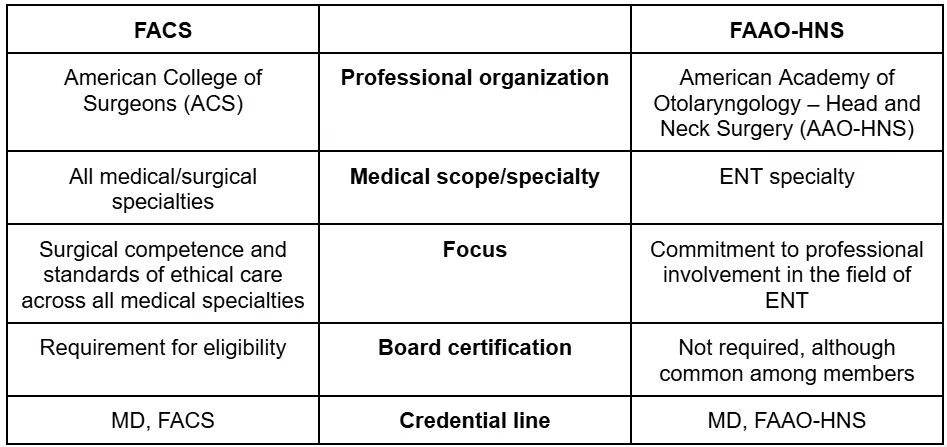
Both the FACS and FAAO-HNS designations are voluntary memberships in professional organizations. Neither indicates nor equates to a professional board certification.
The FACS signifies that a surgeon has met the fellowship criteria of ACS and encompasses all medical fields, including ENT. On the other hand, FAAO-HNS signifies close professional involvement in the field of ENT medicine.
Specific to the ENT field, an FACS designation means that an ENT surgeon demonstrates commitment to upholding professionalism and ethical standards in their field. FAAO-HNS means that an ENT specialist is a member of the largest professional organization for ENTs practicing in the United States.
Here’s a quick overview of the major differences between FACS and FAAO-HNS:
Board Certification in Otolaryngology – Head and Neck Surgery: A Highly Recognized ENT Credential
While both the FACS and FAAO-HNS designations are common among ENT practitioners, board certification in Otolaryngology – Head and Neck Surgery is a distinct and widely recognized specialty credential in ENT care.
A board certification is not a legal requirement to provide specialized ENT care, whereas a medical license is.
Board certification is a voluntary credentialing process that indicates that a healthcare provider has undergone specialty training, has passed additional board certification requirements, and has met industry-recognized professional standards, as set by the American Board of Otolaryngology – Head and Neck Surgery (ABOHNS). The ABOHNS is a nationally recognized certifying organization for otolaryngologists practicing in the United States.
When an ENT practitioner is board-certified, they may choose to pursue further specialty training in subspecialties such as complex pediatric otolaryngology, sleep medicine, or neurotology.
Commonly Asked Questions About ENT Credentials and Qualifications in Scottsdale, AZ
What is the difference between an ENT and an otolaryngologist?
An ENT and otolaryngologist refer to the same medical professional.
“Otolaryngologist” is the official medical term for ENT specialists, and widely recognizes that they can treat more than just the ears, nose, and throat. “ENT” is the more commonly used term because it’s easier to remember, as opposed to otolaryngologist.
What is the difference between a licensed and board-certified physician?
A medical license is required for a physician to practice medicine in their state or jurisdiction. Board certification, on the other hand, is not a requirement, but is a voluntary credential in an area of specialty, such as ENT.
Are all otolaryngologists board-certified?
Not all otolaryngologists (ENTs) are board-certified. While all ENTs have a medical license, not all of them are board-certified.
Board certification is not a legal requirement to practice medicine and provide medical services. It’s an additional credential that indicates that a healthcare provider has completed specialty training, additional evaluation, and passed additional requirements set by professional certifying organizations, such as the ABOHNS.
Conclusion: Looking for an ENT Doctor Near Me in Scottsdale, AZ
Scottsdale Sinus and Allergy provides ear, nose, and throat care services in Scottsdale, Paradise Valley, Phoenix, and the nearby communities. Patients can learn more about our clinic and available ENT services by visiting and exploring our website.
Prepare for Allergies in Spring 2022

%20(1).avif)

.avif)
%20(1).avif)
.png)

.avif)

.avif)

.avif)



.avif)
.avif)
.avif)
.avif)
.avif)
.avif)
.avif)
.avif)
.avif)
.avif)
.avif)
.avif)
.avif)
.avif)
.avif)

.avif)



.avif)



%20(1).avif)

.avif)






The information provided in this article is for informational and educational purposes only and does not constitute medical advice. It is not intended to diagnose, treat, cure, or prevent any disease or medical condition. Always seek the guidance of your physician or other qualified healthcare provider with any questions you may have regarding a medical condition or treatment.
Results may vary: Treatment outcomes and health experiences may differ based on individual medical history, condition severity, and response to care.
Emergency Notice: If you are experiencing a medical emergency, call 911 or seek immediate medical attention.