Before the Procedure
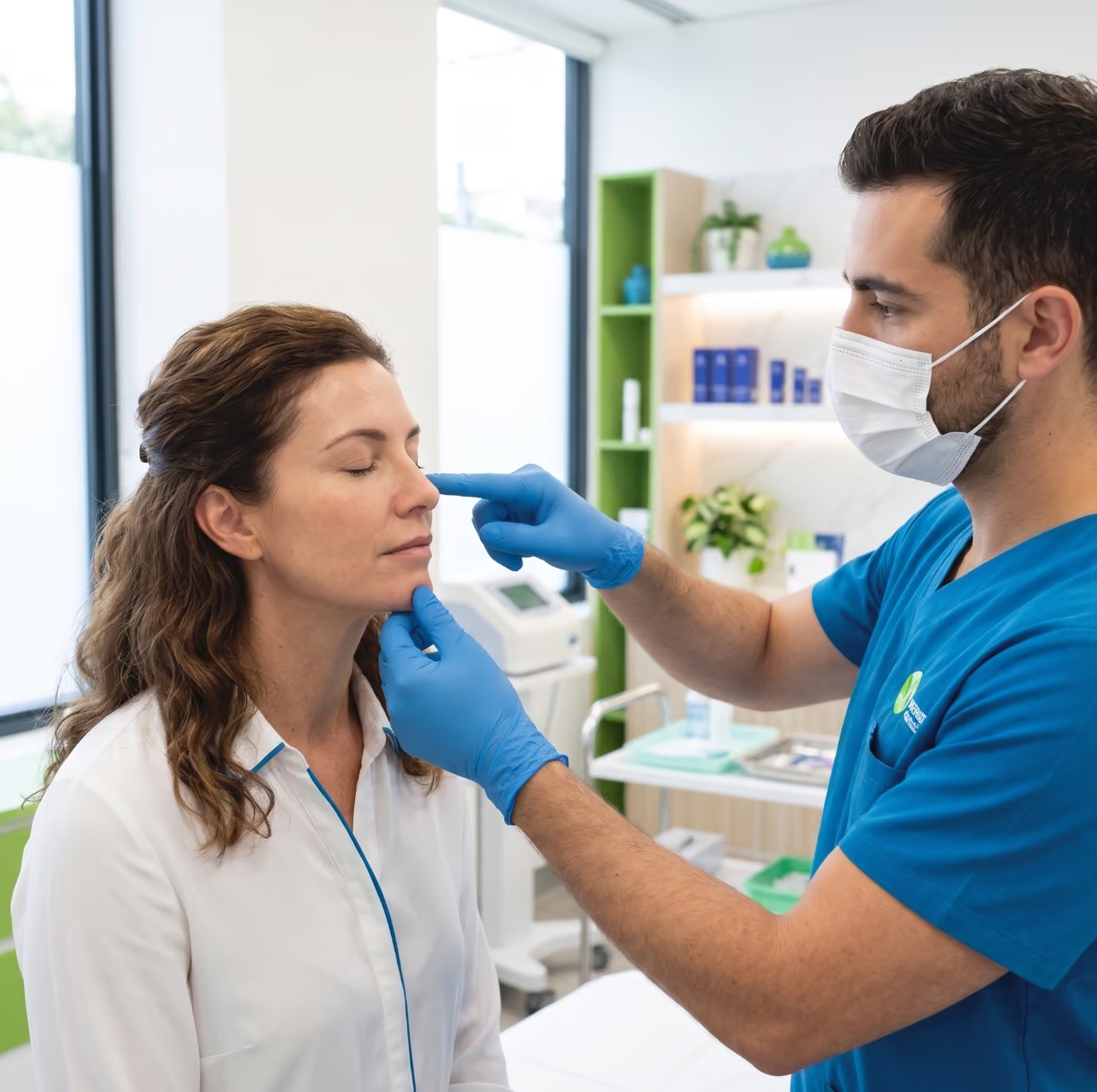
Your provider will review your symptoms, medical history, medications, and sinus imaging.
You will receive instructions about preparing for the procedure, including any medication adjustments or other precautions that may be necessary.
Your provider will also discuss the expected benefits, possible risks, and available alternatives.
During the Procedure
The procedure generally involves the following steps:
- Numbing the treatment area: Local anesthesia is used to help manage discomfort.
- Locating the sinus opening: A small endoscope allows the provider to visualize the nasal passages and guide the instruments.
- Positioning the balloon catheter: The catheter is carefully guided into the selected sinus drainage opening.
- Widening the opening: The balloon is briefly inflated to dilate the passage.
- Removing the balloon: The balloon is deflated and removed, leaving the widened opening.
If more than one sinus opening requires treatment, the process may be repeated.
Patients may experience pressure or discomfort during balloon inflation, even with anesthesia.
The exact procedure and anesthesia approach depend on the patient's anatomy and treatment plan.
After the Procedure
Patients undergoing uncomplicated in-office balloon sinuplasty generally return home the same day.
Your provider will explain post-procedure care, activity restrictions, and follow-up recommendations.
What Is Recovery Like After Balloon Sinuplasty?
Recovery varies depending on the patient, the extent of treatment, and whether balloon dilation is performed alone or alongside another procedure.
Temporary symptoms may include:
- Nasal congestion
- Mild facial pressure or soreness
- Blood-tinged nasal drainage
- Temporary nasal irritation
- Fatigue or discomfort
Some patients resume light daily activities within a day or two, while others need additional recovery time.
Your provider may recommend:
- Using saline nasal sprays or rinses as directed
- Avoiding strenuous activity temporarily
- Following instructions about nose blowing
- Taking prescribed medications as directed
- Attending recommended follow-up appointments
Your ENT team will provide instructions based on your specific treatment and recovery needs.
Direct Answer: Is Balloon Sinuplasty Painful?
Balloon sinuplasty is typically performed with anesthesia to help manage discomfort.
Patients may feel pressure, stretching, or temporary discomfort during balloon inflation. Experiences vary depending on individual sensitivity, anatomy, and the anesthesia used.
Some soreness or congestion may also occur afterward.
Your provider will explain the anesthesia plan and available comfort measures before the procedure.
Balloon Sinuplasty vs. Traditional Sinus Surgery
Both balloon sinuplasty and endoscopic sinus surgery may be used to improve sinus drainage, but they address different clinical needs.
Balloon Sinuplasty
Balloon sinuplasty uses an inflatable balloon to widen selected sinus drainage openings.
When performed as a standalone procedure, it does not require cutting or removing bone or tissue.
It may be appropriate for selected patients whose sinus disease can be addressed through balloon dilation.
Endoscopic Sinus Surgery
Endoscopic sinus surgery uses specialized instruments inserted through the nostrils to access the sinuses.
Depending on the patient's condition, the procedure may involve removing obstructing tissue, addressing nasal polyps, or enlarging sinus drainage pathways.
It may be recommended for patients with more extensive disease or findings that balloon dilation alone cannot adequately address.
Which Procedure Is Better?
Neither procedure is automatically better for every patient.
The appropriate approach depends on your diagnosis, sinus anatomy, imaging findings, and response to previous treatment.