


What Can a Sinus CT Show When Nasal Congestion Is Mostly on One Side?
One nostril feels blocked almost every day, while the other seems to breathe normally. You switch sleeping positions, try allergy medication, or wait for the congestion to clear, but the same side continues to feel restricted. When nasal congestion is mostly on one side, it raises a different set of questions than typical allergy-related stuffiness.
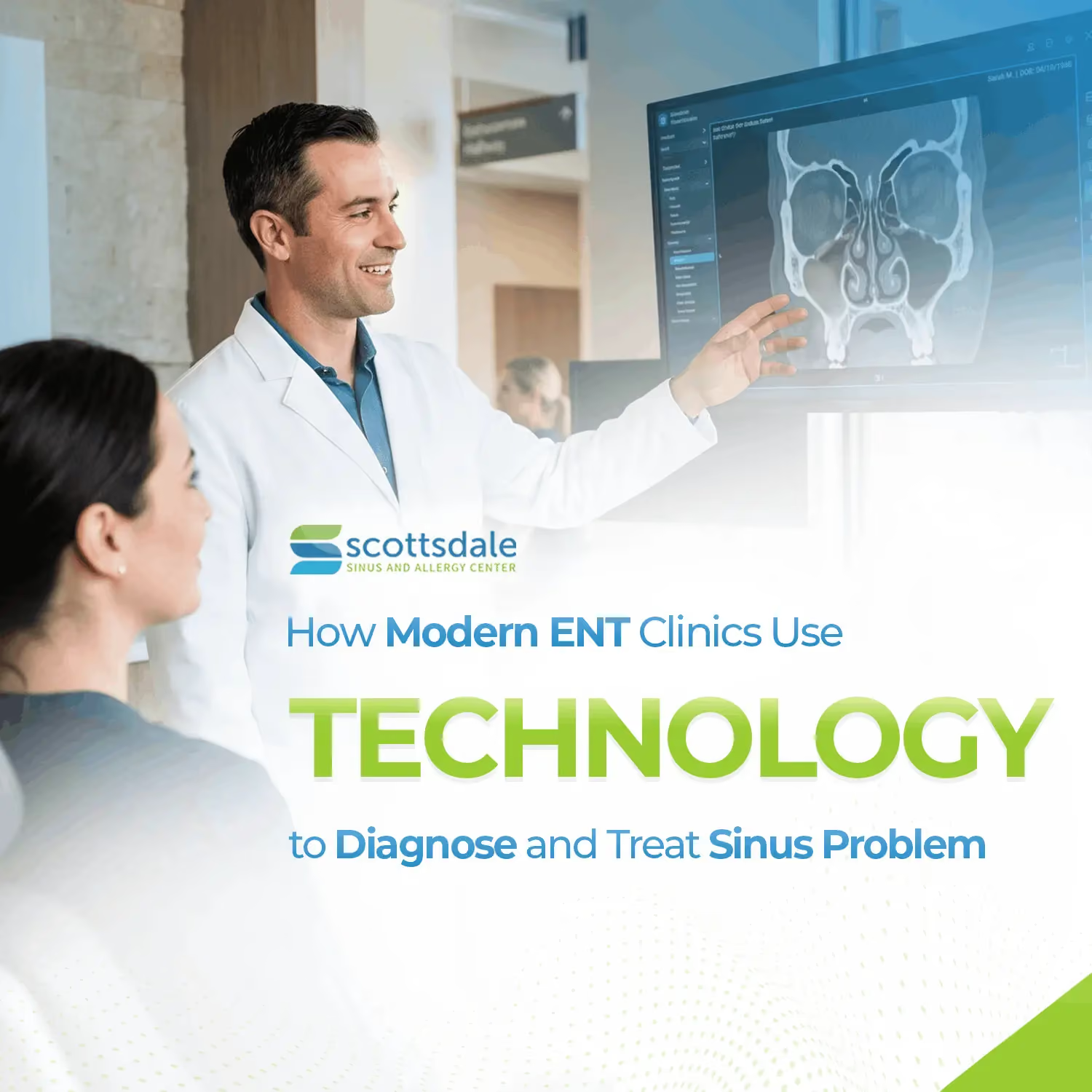
A sinus CT scan can help an ENT physician look beyond the symptoms and evaluate the structures inside your nose and sinuses. At Scottsdale ENT & Allergy, CT imaging is one of the tools used to evaluate patients with persistent nasal congestion, chronic sinus symptoms, and breathing problems when additional information is needed to guide treatment.
Why Is Only One Side of My Nose Congested?
Not all nasal congestion is caused by allergies or a cold. While temporary swelling can affect either side of the nose, persistent congestion that stays on the same side may point to a structural issue, chronic inflammation, or another condition affecting airflow.
Some of the more common possibilities include:
- A deviated septum.
- Enlarged turbinates.
- Nasal polyps.
- Chronic sinus inflammation.
- Less commonly, other growths or structural abnormalities inside the nasal cavity.
The symptoms alone do not identify which of these is responsible, which is why an ENT evaluation may include imaging when appropriate.
What Is a Sinus CT Scan?
A sinus CT scan is a specialized imaging study that creates detailed pictures of the nasal passages and sinus cavities. Unlike a standard X-ray, it provides a clearer view of the bones, air spaces, drainage pathways, and surrounding soft tissue structures.
An ENT may recommend a CT scan when congestion persists despite treatment, repeatedly affects the same side, or occurs alongside symptoms such as facial pressure, recurring sinus infections, or reduced sense of smell.
The scan helps answer a specific question: Is there something inside the nose or sinuses that explains the persistent blockage?
A Sinus CT Can Show a Deviated Septum
A deviated septum is one of the most common reasons one side of the nose feels consistently blocked.
The septum is the wall of cartilage and bone that separates the two nasal passages. If it leans significantly toward one side, it can reduce the amount of space available for airflow.
A CT scan shows:
- How far the septum is shifted.
- Which nasal passage is narrowed.
- Whether the deviation may also affect nearby sinus drainage pathways.
Not everyone with a deviated septum has symptoms. The CT findings are considered alongside your breathing difficulties and examination before treatment decisions are made.
It Can Identify Chronic Sinus Inflammation
Persistent congestion is not always caused by anatomy alone. A CT scan can show inflammation within the sinus lining that may not be visible during a routine examination.
Chronic sinus inflammation may appear as:
- Thickened sinus lining.
- Swollen sinus passages.
- Areas where normal drainage is reduced.
These findings can help identify sinus inflammation, but they must be interpreted alongside your symptoms, medical history, and examination
It Can Detect Nasal Polyps
Nasal polyps are soft, noncancerous growths that develop because of chronic inflammation inside the nose and sinuses.
Depending on their size and location, they may:
- Block airflow through one side of the nose.
- Reduce the sense of smell.
- Contribute to chronic congestion and sinus pressure.
- Interfere with sinus drainage.
A CT scan helps show the extent of sinus involvement when polyps are suspected. Your ENT may also use nasal endoscopy to examine the nasal passages directly.
It Can Show Blocked Sinus Drainage Pathways
Each sinus drains through small openings into the nasal cavity. If one of these pathways becomes narrowed or blocked, mucus cannot move normally.
A CT scan may show obstruction involving:
- The maxillary sinuses beneath the cheeks.
- The ethmoid sinuses between the eyes.
- The frontal sinuses above the eyes.
- The sphenoid sinuses deeper behind the nose.
Blocked drainage can contribute to recurring sinus infections, facial pressure, and congestion that keeps returning on the same side.
What If Allergies Are Causing the Congestion?
Allergies can absolutely cause nasal congestion, but they do not always explain why one side stays blocked.
In Scottsdale, year-round allergens such as desert weeds, grasses, tree pollen, mold, and dust can cause ongoing nasal inflammation. Allergies may also worsen congestion caused by a deviated septum or enlarged turbinates by adding additional swelling inside an already narrow nasal passage.
This is one reason an ENT evaluation often considers both allergies and structural causes together rather than treating them as separate problems.
Can a Sinus CT Show Why Medications Are Not Helping?
Sometimes medications reduce inflammation, but congestion persists because there is still a physical obstruction.
A CT scan can help identify situations where:
- The nasal passage remains narrowed despite reduced swelling.
- Structural anatomy limits airflow.
- Chronic sinus disease continues despite previous treatment.
- Multiple factors are contributing to congestion at the same time.
This information helps your ENT determine whether continued medical treatment, allergy management, or another approach is appropriate.
What Happens After the CT Scan?
The CT scan is one part of the evaluation, not the diagnosis by itself.
Your ENT will review the imaging alongside your symptoms, medical history, and physical examination. Depending on the findings, treatment may include medications to reduce inflammation, allergy treatment, saline irrigation, or discussion of procedures when structural problems are significantly affecting breathing.
A CT scan does not automatically mean surgery is recommended. Many patients use the results to confirm that medical treatment is appropriate, while others learn that anatomy is playing a larger role in their symptoms.
When Should You See an ENT for One-Sided Nasal Congestion?
Occasional congestion that switches sides is often part of the normal nasal cycle. Persistent blockage deserves evaluation when it affects daily breathing or keeps returning.
Consider scheduling an evaluation if:
- The same nostril stays blocked for several weeks.
- Congestion returns after finishing treatment.
- You have recurring sinus infections on the same side.
- Facial pressure or headaches accompany the congestion.
- Your sense of smell has decreased.
- Nasal congestion interferes with sleep or exercise.
Persistent one-sided congestion is a reason to look for an underlying cause rather than continuing to treat symptoms alone.
Get Answers Beyond "It's Just Congestion"
When one side of your nose stays blocked, there is often more to the story than temporary congestion. A sinus CT scan can help identify whether a deviated septum, chronic sinus inflammation, nasal polyps, or another structural problem is contributing to your symptoms.
Request an evaluation with Scottsdale ENT & Allergy to determine whether a sinus CT scan can help identify the cause of your persistent one-sided nasal congestion.
Prepare for Allergies in Spring 2022




















































The information provided in this article is for informational and educational purposes only and does not constitute medical advice. It is not intended to diagnose, treat, cure, or prevent any disease or medical condition. Always seek the guidance of your physician or other qualified healthcare provider with any questions you may have regarding a medical condition or treatment.
Results may vary: Treatment outcomes and health experiences may differ based on individual medical history, condition severity, and response to care.
Emergency Notice: If you are experiencing a medical emergency, call 911 or seek immediate medical attention.