


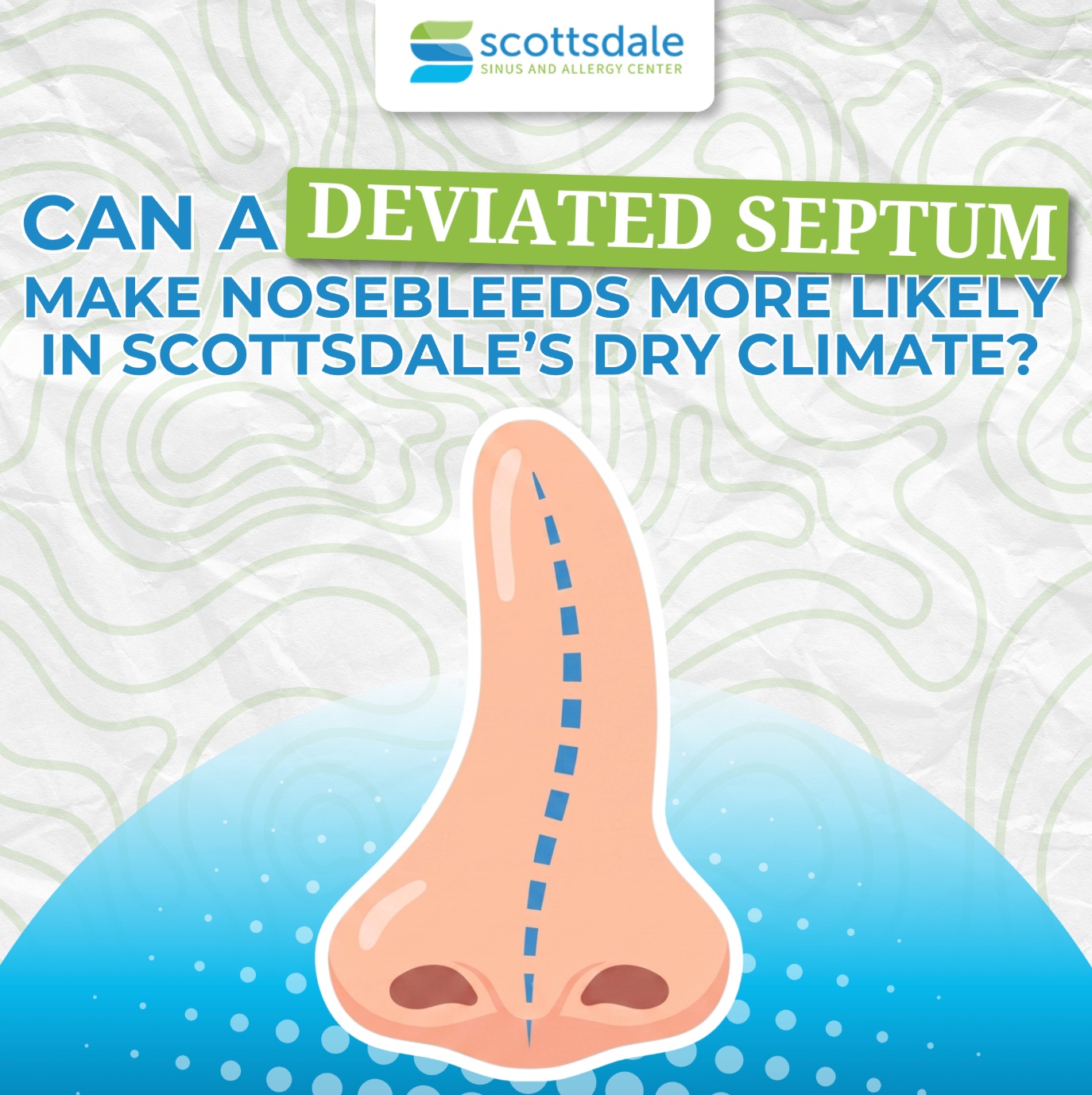
Can a Deviated Septum Make Nosebleeds More Likely in Scottsdale’s Dry Climate?
Nosebleeds, also called epistaxis, are common and usually not a sign of a serious medical problem. Still, recurring bleeding can be frustrating—especially in Scottsdale, where dry desert air can leave the inside of the nose irritated and uncomfortable.
A deviated septum may make nosebleeds more likely in some people, particularly when dry air, allergies, frequent nose blowing, or nasal irritation are also present. The deviation does not necessarily cause bleeding by itself, but it can affect airflow and contribute to dryness or crusting along sensitive areas of the nasal lining.
At Scottsdale Sinus and Allergy Center, patients can receive an evaluation to identify possible causes of recurring nosebleeds and determine whether a structural or inflammatory nasal condition may be contributing.
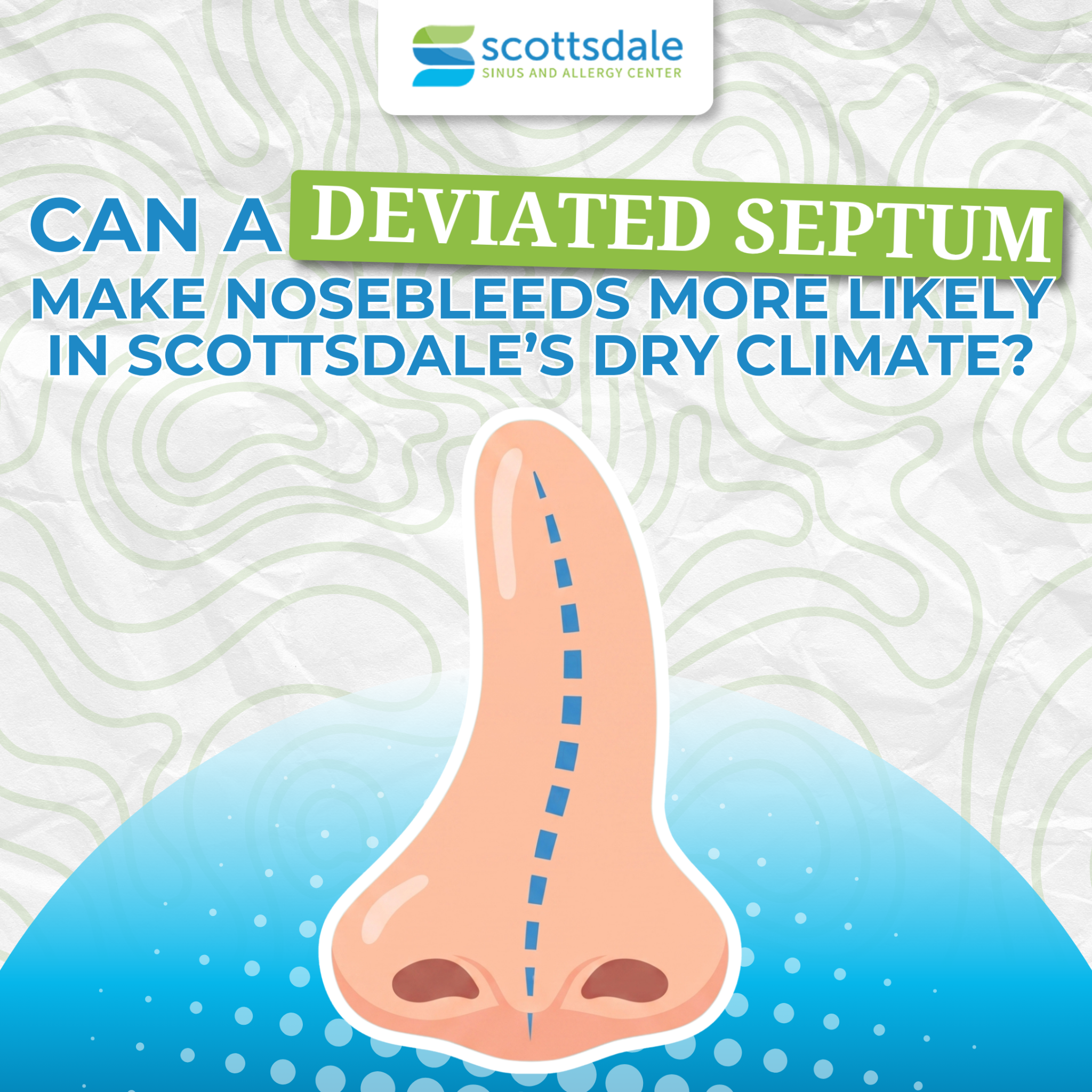
What Is a Deviated Septum?
The nasal septum is the wall of cartilage and bone that separates the nose into left and right passages. A deviated septum occurs when this wall is positioned off-center, making one nasal passage narrower than the other.
Many people have some degree of septal deviation. A mild deviation may not cause any noticeable problems, while a more significant deviation may interfere with nasal airflow.
Possible symptoms include:
- Difficulty breathing through one or both sides of the nose
- One nostril consistently feeling more blocked
- Nasal congestion that becomes worse during colds or allergy flares
- Frequent nosebleeds
- Dryness or crusting inside the nose
- Noisy breathing during sleep
- A need to sleep on a particular side to breathe more comfortably
Not everyone with these symptoms has a deviated septum, and not everyone with a deviated septum needs treatment.
What Causes a Deviated Septum?
Some people are born with an off-center septum. In other cases, the deviation develops after an injury that shifts the cartilage or bone inside the nose.
Potential causes include:
- Nasal trauma during birth
- Contact-sport injuries
- Falls
- Motor-vehicle accidents
- A broken nose
- Other injuries to the face
A deviation may also become more noticeable over time as changes in the nasal structures affect airflow.
Can a Deviated Septum Make Nosebleeds More Likely?
It can be a contributing factor.
When the septum is significantly off-center, air may move differently through each side of the nose. Certain areas of the septum may become more exposed to airflow, dryness, and irritation. The surface can then develop crusting or small cracks that make the underlying blood vessels easier to injure.
A deviated septum may also make one side of the nose feel persistently blocked. Repeated nose blowing, rubbing, scratching, or the use of nasal products may further irritate the lining.
This does not mean that every person with a deviated septum will experience nosebleeds. It also does not mean that every recurring nosebleed is caused by septal deviation. An examination is needed to identify where the bleeding begins and what factors may be contributing.
Why Does Scottsdale’s Dry Climate Matter?
The nasal lining normally produces moisture that helps protect delicate tissue and trap dust, allergens, and other airborne particles.
Scottsdale’s desert climate can dry the nasal lining, especially when combined with indoor air conditioning. As the tissue loses moisture, it may become irritated, cracked, or crusted. Small blood vessels near the front of the nasal septum can then bleed more easily.
Dryness may become more noticeable during:
- Periods of particularly low humidity
- Extended exposure to air conditioning
- Outdoor activities in hot or windy conditions
- Allergy flares
- Respiratory infections
- Frequent nose blowing
- Travel to higher elevations
- Use of medications or nasal products that contribute to dryness
When dry air and an uneven nasal passage occur together, the risk of irritation may increase.
What Else Can Cause Recurring Nosebleeds?
A deviated septum and dry air are only two possible contributing factors. Nosebleeds may also be associated with:
- Nose picking or scratching
- Forceful nose blowing
- Nasal or facial injuries
- Allergies
- Colds and other respiratory infections
- Irritating nasal sprays
- Blood-thinning medications
- Bleeding or clotting disorders
- Uncontrolled high blood pressure
- Exposure to smoke or chemical irritants
- Abnormal tissue or growths inside the nose
Recurring bleeding from the same side of the nose should be evaluated rather than automatically attributed to Scottsdale’s climate.
How Do You Stop a Nosebleed?
Most common nosebleeds begin near the front of the nasal septum and can be managed with direct pressure. The Mayo Clinic recommends the following steps:
- Sit upright and lean slightly forward.
Keep your head above your heart. Leaning forward helps keep blood from draining down your throat, where it may cause coughing, choking, nausea, or vomiting. - Gently clear any large blood clots.
If needed, gently blow your nose once before applying pressure. - Pinch the soft part of the nose.
Use your thumb and index finger to firmly pinch both nostrils closed. Pinch the soft, fleshy portion of the nose—not the hard, bony bridge. - Breathe through your mouth.
- Maintain continuous pressure for 10 to 15 minutes.
Set a timer and do not release the pressure early to check whether the bleeding has stopped. - Repeat once if necessary.
If bleeding continues, pinch the nose for another 10 to 15 minutes.
Do not tilt your head backward. This can cause blood to run down the throat instead of out through the nostrils.
Avoid stuffing tissues, cotton, or other objects deeply into the nose because removing them may irritate the tissue and restart the bleeding.
What Should You Do After the Bleeding Stops?
After a nosebleed, allow the irritated blood vessel time to heal.
For the next several hours:
- Avoid picking or rubbing the nose
- Avoid forceful nose blowing
- Avoid bending over with the head below the heart
- Avoid heavy lifting or strenuous exercise
- Sneeze with your mouth open when possible
- Keep the nasal lining moisturized
If the nosebleed begins again, repeat the pressure technique.
How Can You Help Prevent Nosebleeds in a Dry Climate?
Preventive care focuses on protecting the nasal lining from dryness and irritation.
Use a humidifier
Running a clean humidifier in the bedroom may add moisture to indoor air. Clean the device regularly according to the manufacturer’s directions to reduce the risk of mold or bacterial growth.
Use saline spray or gel
A saline nasal spray can add moisture to the nasal passages. A water-soluble saline gel may provide longer-lasting moisture along the front of the nasal septum.
Apply products gently and avoid inserting applicators deeply into the nose. Ask a healthcare provider before regularly applying medicated ointments or petroleum-based products inside the nose.
Avoid forceful nose blowing
Blow gently and treat underlying congestion when appropriate. Repeated forceful blowing can disturb healing tissue and restart bleeding.
Avoid putting objects inside the nose
Cotton swabs, fingernails, and other objects can injure the nasal lining. Keeping children’s fingernails trimmed may help reduce accidental scratching.
Review nasal-spray technique
Some nasal sprays can irritate the septum when aimed toward the center of the nose. When instructed to use a nasal spray, aim the nozzle slightly outward—away from the septum—and follow the product or provider instructions.
Avoid smoke and other irritants
Smoking, vaping, dust, and chemical fumes may dry or irritate the nasal lining. Reducing exposure may help protect sensitive tissue.
When Should You See an ENT for Nosebleeds?
Consider scheduling an evaluation if:
- Nosebleeds happen frequently
- Bleeding repeatedly begins on the same side
- Nasal dryness or crusting does not improve
- One side of the nose remains blocked
- You have difficulty breathing through the nose
- Nosebleeds interfere with sleep or daily activities
- You take blood-thinning medication
- You have unusual bruising or other bleeding symptoms
- Home moisture measures are not helping
An ENT provider can examine the nasal passages, identify the likely bleeding site, and look for septal deviation, prominent blood vessels, inflammation, crusting, or other contributing conditions.
Depending on the findings, treatment may include moisture strategies, medication adjustments coordinated with the prescribing provider, cauterization of a specific blood vessel, nasal packing, or treatment of an underlying structural or inflammatory condition.
Do not stop prescribed blood-thinning medication unless the prescribing healthcare provider specifically instructs you to do so.
When Does a Nosebleed Need Emergency Care?
Seek immediate medical care if:
- Bleeding remains active after two rounds of firm pressure
- The bleeding is heavy or difficult to control
- Blood is flowing heavily down the throat
- You have trouble breathing
- You feel faint, weak, confused, or lightheaded
- The nosebleed follows a significant injury to the head or face
- You are vomiting repeatedly after swallowing blood
- You have a known bleeding disorder
- You take a blood thinner and the bleeding will not stop
Call 911 for severe bleeding, breathing difficulty, loss of consciousness, or other symptoms that appear life-threatening.
Understanding Nosebleeds in Scottsdale’s Dry Climate
A deviated septum may contribute to recurring nosebleeds by changing nasal airflow and increasing dryness or irritation along sensitive areas of the septum. Scottsdale’s dry climate may add to that irritation, but allergies, medications, injuries, and other conditions can also cause nasal bleeding.
Scottsdale Sinus and Allergy Center provides ear, nose, and throat evaluations for patients in Scottsdale and nearby communities.
If you experience frequent nosebleeds, persistent nasal dryness, or difficulty breathing through one side of your nose, contact our team to discuss what may be contributing and which treatment options may be appropriate.
Prepare for Allergies in Spring 2022
%20(1).png)
.png)
%20(1).webp)
.png)

%20(1).png)
.webp)


.webp)

.webp)


.webp)
.webp)
.webp)
.webp)
.webp)
.webp)
.webp)
.webp)
.webp)
.webp)
.webp)
.webp)
.webp)
.webp)
.webp)

.webp)


.webp)


%20(1).webp)

.webp)


The information provided in this article is for informational and educational purposes only and does not constitute medical advice. It is not intended to diagnose, treat, cure, or prevent any disease or medical condition. Always seek the guidance of your physician or other qualified healthcare provider with any questions you may have regarding a medical condition or treatment.
Results may vary: Treatment outcomes and health experiences may differ based on individual medical history, condition severity, and response to care.
Emergency Notice: If you are experiencing a medical emergency, call 911 or seek immediate medical attention.